English

 Home
Home Hotels


 Car Rental
 Rewards
 Travel Guide
Prague Travel Guide: What to Do, Eat, and Experience

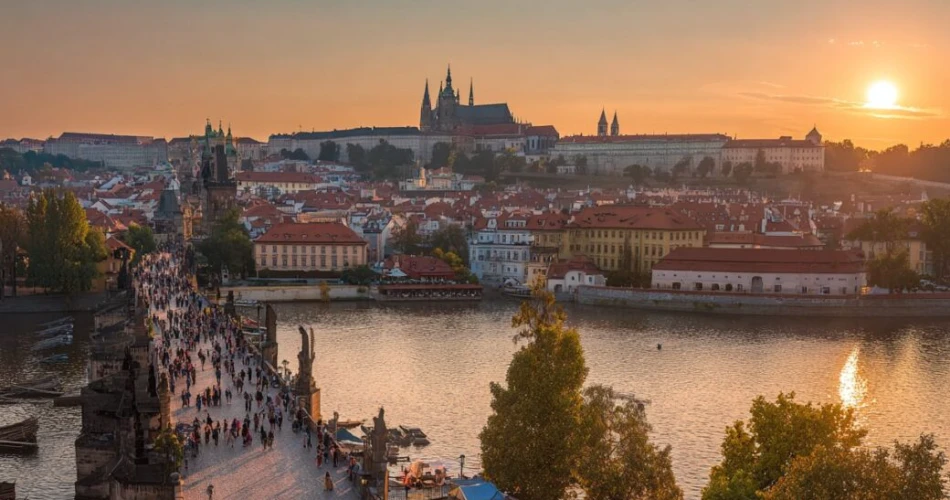
Often called the jewel of Eastern Europe, Prague is one of the most visited cities in the Czech Republic. Known locally as Praha, the city is famous for its red-tiled rooftops, Gothic church spires, and winding cobblestone streets that give it a timeless, storybook character.
Seen from the Old Town Hall Tower, Prague reveals an extraordinary mix of medieval quarters, grand boulevards, and riverbanks lined with historic buildings. There is something here for every kind of traveler: atmospheric old streets, lively cafés, world-class museums, and neighborhoods that feel both local and modern. Areas like Old Town are rich in iconic landmarks, while districts such as Vinohrady offer a more contemporary, residential charm.
If you are visiting for the first time, this Prague travel guide will help you plan your trip, showing you how to get around, what to see, where to eat, where to go at night, and which parts of the city to explore.
How to Get Around Prague
Prague is an easy city to navigate, thanks to its compact historic center and one of the best public transport systems in Europe. Most of the main attractions are within walking distance of each other, making walking one of the most enjoyable ways to explore the city. Guided walking tours are also popular and provide excellent historical context.
For longer distances, Prague’s public transportation network includes trams, buses, and a clean, efficient metro system that connects all major areas of the city.
Traveling from Václav Havel Airport Prague (PRG) to the city center is straightforward. Bus No. 119 runs from the airport to Nádraží Veleslavín metro station on Line A (green), which continues directly into the city center. Taxis are available at the airport and typically cost between 450 and 560 CZK, though visitors should remain cautious, as overcharging has occasionally been reported.
Things to Do in Prague
Prague offers one of the richest sightseeing experiences in Europe. The city is filled with royal palaces, Gothic cathedrals, historic bridges, and panoramic viewpoints, all set along the winding Vltava River. Whether you are drawn to imperial history, architecture, photography, or simply wandering beautiful streets, these are the essential experiences that define Prague.
Visit Prague Castle

Prague Castle, known in Czech as Pražský hrad, is recognized as the largest ancient castle complex in the world. Founded in the 9th century, it has served as the seat of Bohemian kings, Holy Roman emperors, and modern Czech presidents. The entire complex covers approximately 70,000 square meters and includes palaces, courtyards, gardens, and churches.
Around 1.8 million visitors explore the castle every year. One of its greatest treasures is the Czech Crown Jewels, kept inside St. Vitus Cathedral. These include the Crown of Saint Wenceslas, the royal scepter, orb, sword, and a golden reliquary cross. Because of their historical and symbolic importance, the jewels are displayed to the public only on very rare occasions.
Visit the John Lennon Wall

Near the Charles Bridge, the John Lennon Wall, or Lennonova zeď, stands as one of Prague’s most colorful and symbolic landmarks. Covered in song lyrics, graffiti, and murals inspired by John Lennon and the Beatles, the wall became a symbol of peace and free expression during the Communist era.
The artwork changes constantly as new messages and paintings are added. Today, it remains a popular photo stop and a brief but meaningful visit that shows a different, more modern side of Prague’s history.
Be Amazed by St. Vitus Cathedral
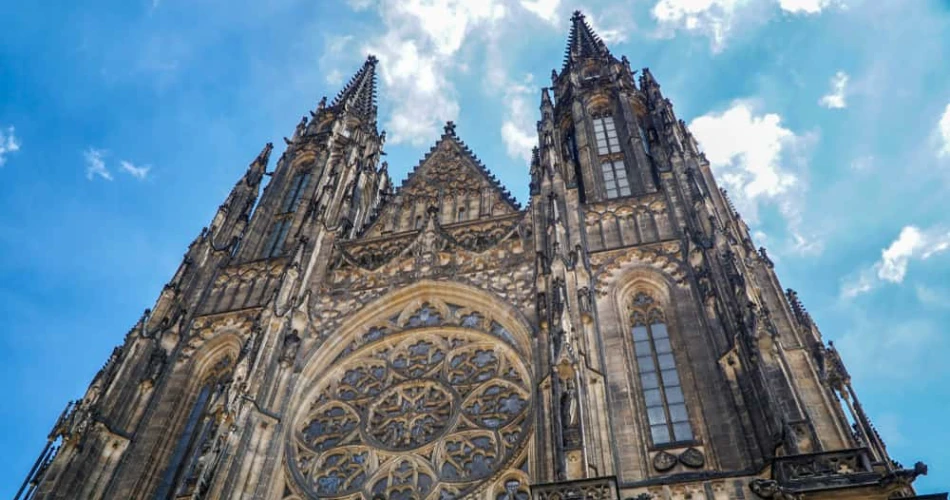
Located within the Prague Castle complex, St. Vitus Cathedral (Katedrála svatého Víta) is the most important church in the Czech Republic and one of the city’s most impressive buildings. It is not only the home of the Crown Jewels but also the burial place of many Bohemian kings and Holy Roman emperors.
Built in the Gothic style, the cathedral features soaring towers, detailed stonework, and magnificent stained-glass windows. The main tower rises to about 103 meters, dominating the skyline and offering an unforgettable sense of scale.
Inside, one of the most remarkable areas is St. Wenceslas Chapel. Behind a door secured by seven locks lies the chamber where the Crown Jewels are kept. Although the chamber itself is not open to visitors, the chapel can be admired from within the cathedral for its decoration and historical importance.
Walk Across the Charles Bridge

The Charles Bridge (Karlův most) is Prague’s most iconic structure and one of the most famous bridges in Europe. Built in 1357 under Emperor Charles IV, it connects Old Town with Lesser Town and Prague Castle, crossing the Vltava River at the heart of the historic city.
The bridge is lined with baroque statues and is famous for its views in every direction. According to historical records, egg yolks were added to the mortar during construction to make it stronger. Today, the bridge is filled with musicians, artists, and vendors throughout the day. Visiting early in the morning is the best way to enjoy it in peace and capture beautiful photos.
Enjoy the View from Petřín Lookout Tower

Petřín Lookout Tower (Petřínská rozhledna) is one of the best viewpoints in Prague. Standing 63.5 meters tall on Petřín Hill, it offers sweeping views over the city’s rooftops, bridges, and castle skyline.
Reaching the tower requires an uphill walk of about 30 minutes, but the surrounding park makes the journey pleasant. It is best to allow at least two hours to explore the hill, climb the tower, and enjoy the scenery. The open steel structure is often compared to a smaller version of the Eiffel Tower and makes the climb part of the experience.
Best Restaurants in Prague
Prague’s food scene combines traditional Czech cuisine with international influences, ranging from historic beer halls to elegant riverside dining rooms. Whether you want to try classic dishes like goulash and roast duck or enjoy Italian and modern European food, the city offers excellent choices.
Lokál Dlouhááá

is a casual and welcoming Czech restaurant popular with both locals and visitors. It serves traditional dishes such as dumplings, beef goulash, sausages, and roast pork, along with excellent Czech beer at reasonable prices.
BRICK’S | Hergetova Cihelna

offers dining with beautiful views of the Charles Bridge, especially at sunset. The menu includes steaks, seafood, and risotto, and the outdoor terrace makes it a favorite spot for evening meals.
Restaurace Mincovna

located directly on Old Town Square, is known for classic Czech dishes like goulash and duck, as well as modern interpretations such as smoked brisket.
Ristorante • Pizzeria Giovanni

is a small but popular Neapolitan-style pizzeria in Old Town. The Margherita pizza is especially well-regarded, but reservations are recommended due to the limited seating.
U Modré Kachničky II

is a well-known traditional restaurant specializing in duck, with other options such as rabbit, chicken, lamb, and veal. It has two locations with similar menus and atmospheres.
Nightlife in Prague
Prague has one of the most vibrant nightlife scenes in Central Europe, offering everything from relaxed riverside bars to massive clubs that stay open until morning.
Along the Vltava River, areas such as Náplavka are popular for casual evening drinks, especially around sunset. The riverside is lined with bars, cafés, and boat venues that create a lively but laid-back atmosphere.
Beer gardens are another Prague favorite. Hospůdka Na Hradbách in Vyšehrad offers affordable drinks, food, and panoramic city views, while Stalin Bar in Letná Park is popular with locals for its skyline views and open-air setting.
For clubbing, Chapeau Rouge is a well-known multi-floor venue with different music styles on each level. Lucerna and Retro are also popular for their large dance floors and energetic crowds. Karlovy Lázně, located near the Charles Bridge, is a five-story club and one of the largest in Central Europe, with a different music genre on each floor.
Prague Neighborhoods

Prague is made up of distinctive neighborhoods, each offering a different perspective on the city, from historic quarters filled with monuments to quieter, more residential districts.
The Jewish Quarter, known as Josefov, is one of the most historically important areas of the city. Accessible via the Staroměstská metro station, it is home to synagogues, museums, and memorial sites. The Spanish Synagogue is particularly famous for its richly decorated interior.
Lesser Town, or Malá Strana, sits below Prague Castle and is known for its quiet streets, baroque buildings, small squares, and traditional pubs. It also provides access to Petřín Hill and its observation tower.
New Town, or Nové Město, was founded in the 14th century and blends historic landmarks with modern city life. Highlights include Wenceslas Square, the National Museum, the Dancing House, and many of Prague’s nightlife venues.
Shopping in Prague

Shopping in Prague ranges from historic markets and flea markets to modern malls and elegant shopping streets, making it easy to find both souvenirs and everyday items.
Náplavka Farmers Market is popular for local food, snacks, and handmade goods, all set along the river in a relaxed atmosphere.
Buštěhrad Market is a collectors’ market held twice a month, offering stamps, coins, vinyl records, and antiques.
Wenceslas Square and Na Příkopě Street form Prague’s main shopping district, with international brands, shopping galleries, and cafés. Palladium Mall at Republic Square features more than 200 stores across five levels.
Havelská Market, the city’s oldest market, is open daily in Old Town and sells souvenirs, food items, spices, and everyday goods.
The Holešovice Flea Market is known for antiques, clothing, vintage items, and food stalls.
Next post 15 Countries in Europe for a Road Trip
Previous Post Two Days in Paris – The Only Guide You Need
About Author