English

 Home
Home Hotels


 Car Rental
 Rewards
 Travel Guide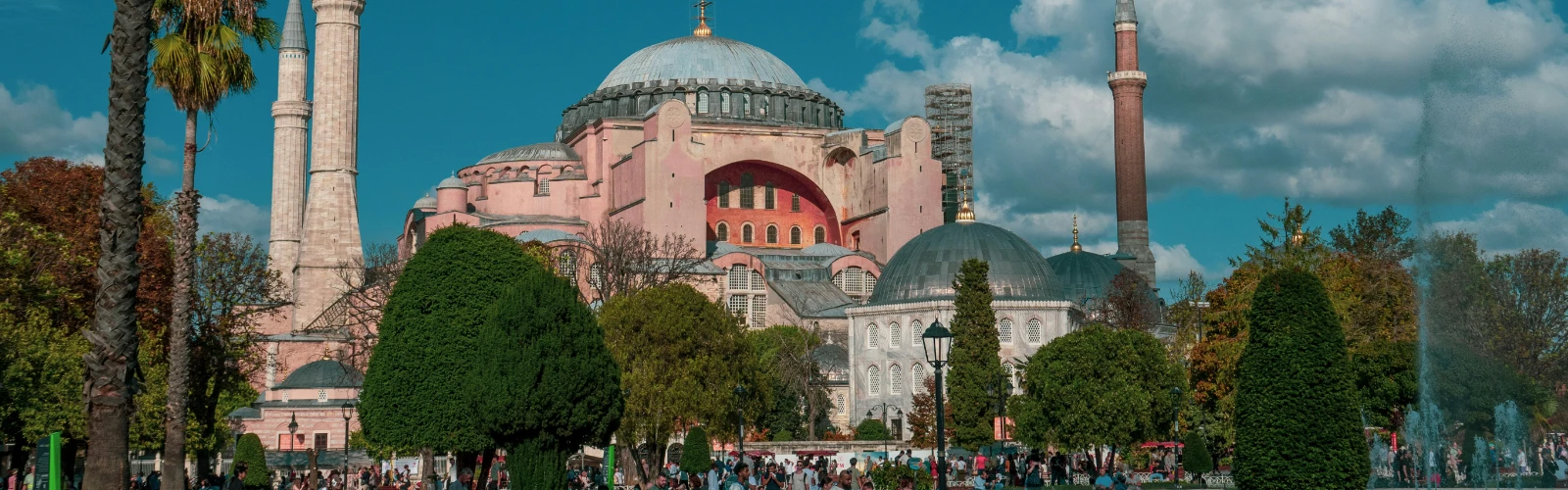
Top 20 Attractions in Europe

Europe, also known as “The Old Continent,” serves as a great treasure trove of everything from ancient and antiquity to baroque and art nouveau, thanks to overlapping history and layers of cultures. Paired with the Arctic’s icy conditions in the north and the perfect Mediterranean’s sun-kissed south, Europe bestows an exceptional side of nature to harmonize with the rich cultural feast that awaits in this extraordinary continent. With plenty of vibrant cities coming alive with scenic landscapes, attractions, and culture, of course, settling on which city to visit in Europe is pretty difficult. That’s why we have brought together a list of the best 20 Attractions in Europe that you can’t afford to miss! So, with adventures awaiting at every turn, it’s time to roll!
Colosseum
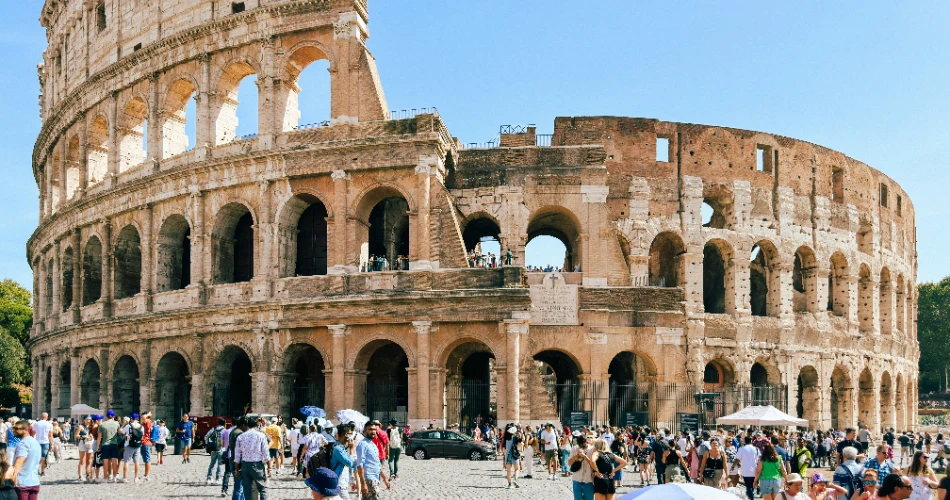
The Colosseum stands as an ideal manifestation of the Roman Empire's power in its full bloom. Built in 72 AD, this amphitheater was the largest ever built at that time, with a capacity of 50,000 spectators. This place hosted a wide range of public events, including bloody gladiator fights, animal hunts, executions, and even water battles to simulate maritime combat. Despite being essentially a remnant, the Colosseum remains a significant city’s symbol of Rome. Explore the building by stepping through its arches, grab a seat, picture yourself as a Roman spectator, and enjoy the magnificent shows and performances that took place within the arena.
Eiffel Tower
The iconic landmark of Paris, inspired by Gustave Eiffel, is among the best places to visit in Europe. The tower was constructed to serve as the grand entrance to the World's Fair in 1889. At 324 meters, the structure was the highest man-made building in the entire globe till the famous Empire State Building surpassed it in the year 1930. Enjoy the amazing panorama of Parisian Street and the scenic park patterns below as you take an elevator all the way up to the tower's observation deck. Alternatively, you can just admire the intricate lattice structure itself while relaxing atop the Champ de Mars.
Hagia Sophia
Hagia Sophia is still a magnificent structure and the largest church in the world for over 1,000 years to set your eyes on. When Istanbul was known as Constantinople in 537 AD, Hagia Sophia was first constructed as an Eastern Orthodox Cathedral. By 1453, it was converted into an Ottoman Mosque and is now open to visitors of all religions as a museum. The Hagia Sophia's dome is a miracle on its own, and the structure as a whole is a superb representation of Istanbul's significant patchwork past and Byzantine design. With its fascinating paintings and unique relics, you may now put together the city’s history with its captivating artifacts and murals.
Lake Bled
Located in Northwest Slovenia near the Bled town, Lake Bled is a glimmering emerald lake encircled by breathtaking greenery hills. Take a pletna, an ancient wooden boat, to the little island of Bled in the center of the lake. The Famous Church of the Assumption of Mary, the 17th-century structure with some Gothic paintings from the 15th century still intact, is located on the island. You will also come across Bled Castle, located near this breathtaking place, where you can enjoy a relaxing walk surrounding the lake, and stop for a swim in its serene waters.
Saint Basil’s Cathedral
Set on Moscow's immensely famed Red Square, Saint Basil’s Cathedral, features colorful onion domes, and is arguably the most recognizable attraction throughout Russia. Another famous figure, Ivan the Terrible, constructed St. Basil's Cathedral in 1555. The building's construction is an incredibly colorful lollypop with odd designs that resemble a funfair. The church is a representation of Russia due to its distinctive architectural design and its historical connections to a successful war in Tatarstan.
St. Peter’s Basilica
One of the most famous works of Italian Renaissance architecture is St. Peter's Basilica, the largest church in the world and is located in the beautiful Vatican City. This monument was designed by Michelangelo, who began working on it in 1506. The original St. Peter's Basilica, which had been in the same location since approximately 360 AD, was replaced with the present basilica. It is believed that the church was constructed atop St. Peter's grave.
Leaning Tower of Pisa
The famed Leaning Tower is well-known across the world because of its amazing four-degree incline, which gives the impression that the structure is about to tip over. The magnificent Romanesque-styled bell tower is situated behind the Pisa Cathedral. The tower, which dates to the 12th century, took an incredible 199 years to build, but when it was being built, the soft surface on one side caused it to tilt. At a whopping 55.86 meters in height, the tower draws people from all over the world who come to see it and capture some snapshots in front of it.
Prague Old Town
The capital of the Czech Republic's Old Town is among the most well-liked and must-see places in Europe since it is brimming with ancient sites. What sets it apart is the historic Old Town Square, home to Old Town Hall and the world's oldest working clock, called Orloj, as well as the Astronomical Clock, which was built in 1410. The Charles Bridge spans the Vltava River and links Prague's Old Town and Lesser Town. Although work on the bridge began around 1357, it wasn't finished till the early 15th century. There are many taverns in the Old Town, and the area has a lively nightlife that makes it fun to stay until dark.
Palace of Versailles
Few monuments can rival Versailles, undeniably one of the most magnificent palaces in the world. Until the French Revolution of 1789, this majestic building served as a chief home of French royalty. The castle's exterior is stunningly ornate, while the interior holds a different charm. The building's interior has certain rooms that are just as well-known as the royal residence itself, like the lavishly decorated Hall of Mirrors. Conical trees are scattered throughout the symmetrical Garden of Versailles, which is mixed with canals and fountains.
Canals of Venice
All other canal cities are measured against Venice, the first canal city. There are approximately 150 rivers and 400 bridges in this waterlogged mysterious city including the well-known Bridge of Sighs. The Grand Canal, which stretches two miles beyond St. Mark's Square and is flanked by several of the city of Venice's most notable examples of baroque and medieval architecture, is the city's primary waterway. Boats along the river serve purposes beyond mere sightseeing; gondoliers, clad in striped shirts and wide-brimmed hats, ferry passengers from place to place.
Sagrada Familia
Antoni Gaudí, the renowned Catalan architect, is the mastermind behind this famously opulent cathedral in Barcelona. Construction on the Sagrada Familia began in 1882, and it is still unfinished even after 137 years. The building is projected to be completed by 2026. Constructed in the Gothic and art nouveau styles, the magnificent cathedral boasts 10 unfinished spires in addition to an amazing eight existing ones. With its twisted turrets, bizarre curves, and interesting gargoyles that seem something from another planet, this very Gaudi-esque building attracts large numbers of tourists.
Tower Bridge
A late Victorian masterwork that epitomizes London's global prominence, Tower Bridge is sometimes confused for London Bridge. This bridge spans the Thames near the iconic Tower of London, another famous structure proudly set in London and was built in 1894. A marvel of 19th-century engineering, the structure serves as a drawbridge driven by engine rooms housed in the neo-gothic south and north towers. With contemporary lighting that sparkles in the evenings, the bridge continues to be in use today.
Alhambra
Located in the Spanish city of Granada, the Alhambra is a combined fortress and palace that was constructed on the remnants of Roman defenses. The Islamic Moors dominated the much of Iberian Peninsula for about 10 centuries; their most enduring region was Andalusia, where Alhambra is positioned. Explore the fortress's oldest section, the citadel, ascend the watchtower, stroll through the breathtaking courtyards, and Moorish gardens, and then marvel at the intricate geometric patterns found all around the complex. Alhambra's location against the Sierra Nevada background adds to its ethereal quality.
Acropolis
Athens' Acropolis is a simply breathtaking attraction with several historic sites on this massive hill which date back to around the 15th century BC. The Parthenon, the Erechtheion, and the sacred temple of the goddess Athena Nike are a few of the sights that dominate the Acropolis. Built in 447 BC during the height of the legendary Athenian Empire, the Parthenon serves as a representation of Greece and is striking due to its many columns. Devoted to Athena, it was converted to a mosque during the Ottoman invasion in the 1460s and subsequently into a Christian church during the 16th century AD. Athens is illuminated by a radiance that begins at dusk and extends to the Acropolis.
Fjords of Norway
Norway's breathtaking fjords are one of the main draws for tourists. Its towering U-shaped valleys and carved cliffs, sculpted by glaciers over an astonishingly long period—more than 2.5 million years—create a breathtaking panorama that captivates the senses. With over a thousand fjords, only a few (such as Hardanger and Geiranger fjords) are most frequently visited, so it’s perfect for those who prefer a slice of solitude. Embarking on a cruise ship provides an excellent opportunity to catch sight of the fjords towering walls as the vessels gracefully glide across the water.
Meteora
The untamed ambiance of Thessaly, Greece, is home to the jutting rock formation known as Meteora, which means "elevated" according to the Greek language. The rocks that resemble hills dominate the horizon. But the monasteries that perilously cling to the cliffs are a component of what makes the breathtaking sight so beautiful. This 15th-century religious structure, situated on cliffs with steps carved into the stone itself, is still open to tourists today. The most well-known of them all else, the Most Holy Trinity Monastery, is a sight to behold. It is situated 400 meters above the ground atop a naturally occurring rock tower.
Canals of Amsterdam
Amsterdam's canal system is well-known. The capital of the Netherlands is encircled by over 100 kilometers of waterways, which create over 90 islands and 1,500 bridges to cross. The 4 main canals in Amsterdam create concentric rings surrounding the city’s center, forming the Grachtengordel, the canal area. The canals were dug during the 17th century and served a variety of purposes, including drinking water, sewage, and transportation. The canals comprise the quaint urban landscape that Amsterdam is renowned for in the contemporary metropolis. Townhouses from the 17th century line the canals, which heightens their allure.
Dubrovnik Old Town
Dubrovnik's Old Town with its stunning red roofs is one of the best places to go in Europe. A multitude of eateries, pubs, shops, and museums are hidden behind the city's cobblestone lanes, which protrude into the Adriatic Sea. The 16th-century stone walls are adorned with decaying structures and baroque churches. Pile Gate, which was constructed in 1573 and is especially stunning at night, is a spectacular example of Renaissance architecture and marks the entrance to the Old Town. The iconic Dubrovnik Cable Car provides a view of the historic city streets from the top.
Mont Saint-Michel
Located approximately one kilometer from the northwest coast of Normandy in France, lies this well-known fortified island. The monastery site at Mont-St-Michel was established in the 18th century and still is in use, so exploring the area may teleport you back in history. The island seems to be a floating fortification in the ocean during high tide. The island was formerly only accessible by foot or vehicle at low tide, but a bridge constructed around 2014 allows pedestrians to access the island on any day.
Pompeii
Mount Vesuvius exploded in 79 AD, causing immense damage. The eruption totally devastated a number of minor towns and communities in the area, Pompeii foremost among them. Strangely, despite being buried beneath tons of volcanic ash, this area has resulted in an exceptionally well-preserved image of a Roman city trapped in the middle of a catastrophe. Excavations at the site began in 1764 but were abandoned over the centuries, taking with them a few valuables. Visitors can now wander through the historic city, marveling at the restored, vibrant frescoes and the plaster casts of humans and animals captured in their final moments.
Next post Ghosts of Venice: 5 Haunting Locations to Explore
Previous Post A Wonderful Winter Walk Along the Seine
About Author