 English

 Home
Home Hotels


 Car Rental
 Rewards
 Travel Guide
The 8 Most Walkable Cities in Europe

As soon as your feet touch the cobblestone streets of Europe, bam! you’re transported to a world bursting with charm and culture! Imagine strolling through picturesque medieval alleys and modern cultural hotspots, where every corner invites you to soak in the local vibe. From the breathtaking attractions of Florence to the rich history that unfolds in the City of Oxford, Europe truly has something for everyone—whether you’re a history buff, an art lover, or simply in search of unforgettable experiences. So, buckle up! In this blog, we’ve rounded up the eight most walkable cities in Europe that you absolutely can’t miss. Let’s dive in!
Dublin, Ireland
Ireland's capital, Dublin, is a super organized Irish city where walking and staying active are truly a big deal. The Emerald Isle is a great place to hike and explore its many treasures, like Trinity College Dublin, in which Irish monks created the famous Book of Kells during 800 AD, and Dublin Castle, which was designed in 1204
Amsterdam, the Netherlands
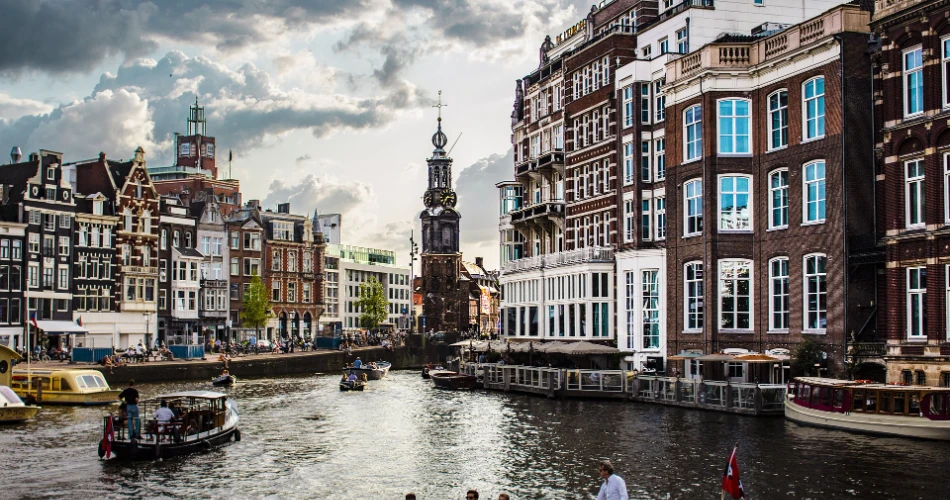
Despite its size, Amsterdam is one of the most walkable metropolises in Europe due to its flat plain position. Amsterdam is famous for having more bicycles than any other city in Europe. Bicycles have their own allocated paths, thus pedestrians must exercise additional caution when crossing roads with busy traffic. You may hire an expert guide for the exploration of the city on a bike, foot, or canal journey so you can learn about its history and take in its vibrant culture. While strolling through Amsterdam, be sure to visit the Van Gogh Museum, the residence of Anne Frank, and one of the local eateries to have delicious poffertjes.
Oxford, England
Take some time to explore Oxfordshire, a charming university city, while you're in London. This modest and historic town is home to some of the best walking spots in Europe. Oxford University was founded in the eleventh century and is home to the Ashmolean, the earliest public museum in England. Oxford's streets are brimming with interesting historic structures, such as the landmark churches perched on corners, pubs where locals go to unwind and learn about the latest events in the community, and dining establishments. Don't forget to stop by the University of Oxford, which has added new wings without losing its historic charm.
Venice, Italy
There's no denying that walking is the greatest way to discover Venice, a city of Gondolas. Taking a ride in a gondola, strolling Venice's winding lanes, and discovering where you end up is the greatest way to experience the city. You are bound to discover a way back, so it doesn't matter if you get lost! Take a stroll around the neighborhoods to observe how the people live, work, eat, and engage with the markets and each other. The nicest part of Venice is located deep within the neighborhoods, away from the tourist trappings, so make sure to allow yourself the opportunity to get lost there.
Bruges, Belgium
UNESCO has designated Bruges, a charming gem in northern Belgium, as a World Heritage site due to its exceptionally well-preserved medieval architecture. It feels like you've traveled back in time to the fourteenth century, when social balls, monarchs, and opera were the norm in Bruges. Known as "The Venice of the North," Bruges is well-known due to its dark chocolates and perfectly made beers, which are served cold in enormous mugs. A different option to visit the city is to go on a boat trip down the canal, which gives you a comprehensive perspective of the entire city and allows you to stop and catch sight of old cathedrals and museums.
Paris, France
One of the world's most well-known walkable cities is Paris, thanks to its well-planned walkways that are adorned with charming cafés and parks. The Champs-Elysees, the Seine, the Louvre, the Tuileries Gardens, and the Eiffel Tower are a few of Paris's popular tourist destinations. Traveling to Paris and trying to see everything on your own can feel overwhelming, especially if you don't have a clear itinerary for the sights you want to explore. If you're the kind of person who enjoys exploring new places on their own, the best thing you can do is take public transportation or, even better, hail a cab to your destination for the entire day. From there, you can stroll around and take in the various views and ambiance of the neighborhoods, or arrondissement according to French.
Prague, Czech Republic
Prague is divided into three areas: the New Town, the Old Town, and the smaller region. The Charles Bridge connects these areas, making it easy to stroll from one to the other. Prague is referred to as "the heart of Europe" since central European culture predominates there and the city's splendor is evident on every other corner you turn when strolling around the city's ancient buildings and street art. The New and Old Towns are the primary locations for the best sightseeing. You'll need a water bottle, proper clothing for the mild weather, and comfy footwear to tackle this walkable European city. A variety of architectural assortments, including those in galleries, roadways, concert venues, fashion displays, and music festivals, are good places to start an exploration.
Florence, Italy
Without including Florence, no compilation of Europe's walking cities would be complete. There are countless things to do in Florence when you set foot on its streets. All of Florence's major attractions are conveniently accessible on foot. Do not overlook the wonderful Duomo, the popular Ponte Vecchio, the Accademia Gallery, which houses the David sculpture by Michelangelo and, the Palazzo Vecchio. The art and charm of Florence, a World Heritage Site of UNESCO, are abundant. Remember to take it slow and embrace the laid-back Italian way of life. You'll find charming cafés, beautiful façades, and winding cobblestone streets, with unexpected surprises around every corner.